Gene Regulation with Diet
Nuts, whole grains, beans, fruits, vegetables are all rich in biogenic 1,3/1,4 polyamines, namely spermidine, spermine and putrescine, which, known to stabilize the DNA, improve the circadian rhythm, regulate metabolism, prevent aging and prolong healthspan. They do so, by decreasing enhanced DNA methylation, a marker seen in aging and known to be transmitted through generations of progenies. Polyamines do so, by taking up and owning the methyl group and sparing the methyl group attachment to the DNA base pairs.
In fact, cancer and senescent cells grow and survive partly due to high levels of polyamines they possess. Adult mast cells store cationic polyamines in their granules, attched to sulfated heparan, and proliferate partly due to them, as well as a result of expressing the stem cell factor(SCF) receptor, c-KIT. SCF ligand is mostly supplied by fibroblasts and endothelial cells in the niche. All human cells posses these polyamines, biosynthesized from amino acids, namely, methionine, arginine and ornithine.Their synthesis decreases with age, a phenomenon largely accompanied by widespread DNA methylation that promotes various chronic pathologies and aging signs.
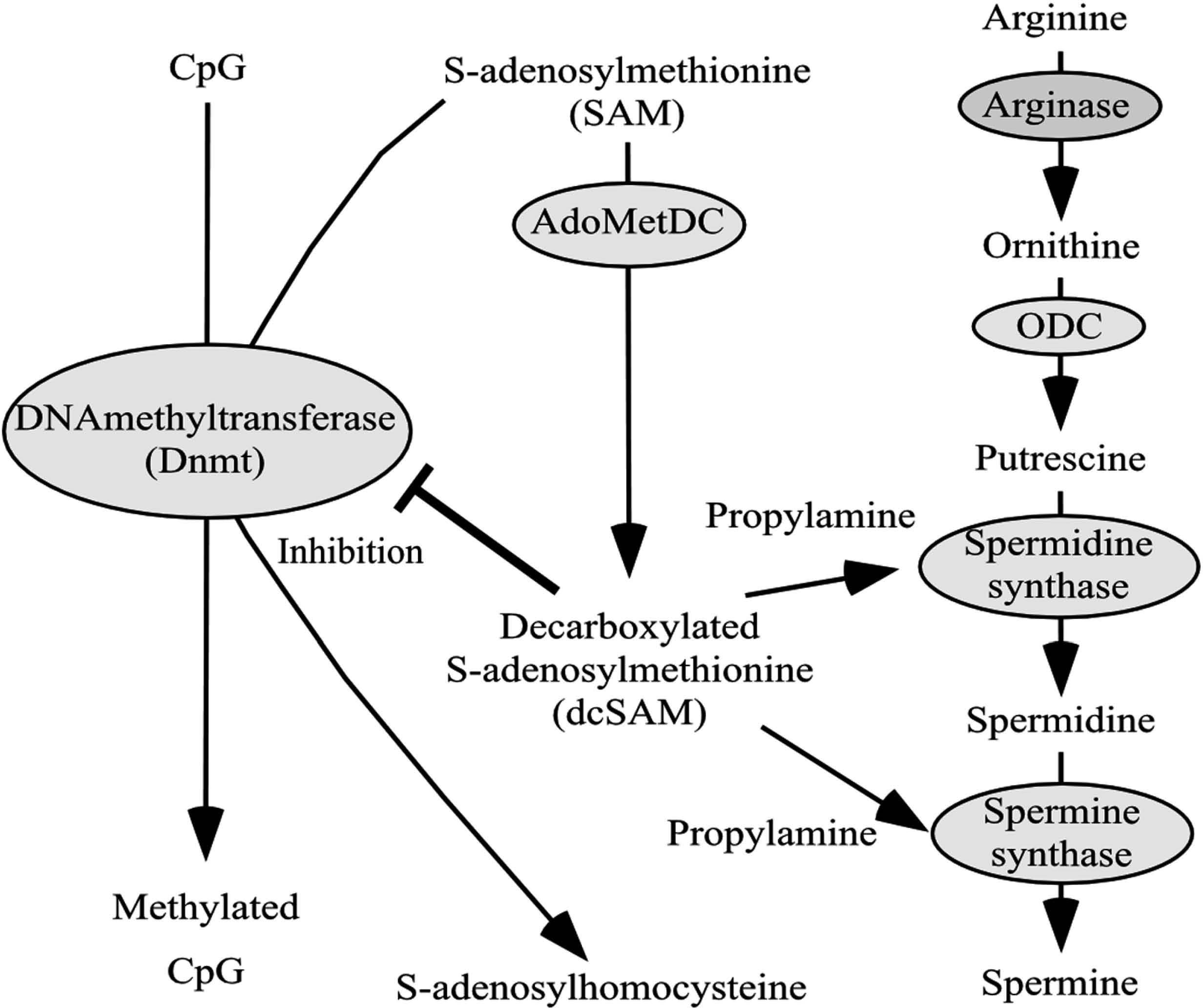 DNA methylation is carried out by DNA methyl transferase(Dnmt). S-adenosyl methionine(SAM), the methyl group carrier, is decarboxylated and the product, in turn, inhibits Dnmt to stop DNA methylation. It then yields propylamine that further converts putrescine, from arginine and ornithine, to both spermidine and spermine. High levels of these end-product polyamines will raise the levels of the decarboxylated S-adenosyl methionine(deSAM) upfront of the pathway. The upstream backlog of deSAM is the result of an end-product inhition in the synthetic pathway. This blocks DNA methy transferase and thus prevents aging and many chronic diseases.
Cationic polyamines may also exert their effects by binding to negatively charged DNA and membrane macromolecules, sterically stabilizing them and promoting better, regulated metabolism.
In cancer and senescent cells, there is shift from oxidative phosphorylation to glycolysis to counter oxidative stress, which is the cause of these cellular states, in the first place. If not, apoptosis takes over, and all is done with. Damage response through chaperones, will fold misfolded proteins by heat shock proteins(HSP) which, by so doing, bind and prevent protein degradation or they will 'rip them to shreds', through autophagy and mitophagy, if irreparable damage has already been done.
Metabolism is slowed down, protein synthesis tapers off, anti-oxidation strategies are upended and repair is engaged with the participation of P53. Polyamine synthesis, through decarboxylation, is ramped up, and, in addition to being an anti-oxidation strategy, promotes survival in senescence cells with persistent repair work, in play, and the proliferative state in cancer.
Another anti-oxidation strategy is preference for the pentose phosphate pathway which supplies NADPH, an antioxidant, that effectively takes part in the reductive synthesis of fatty acids. Ribose-5-phosphate formed is a precursor of DNA and RNA, and erythose-4-phosphate is used to synthesize aromatic amino acids. The pentose-5-pathway and the glycolytic pathway interfeed each other with their intermediate metabolic products, namely fructose-6-phosphate and glyceraldehyde-3-phoshate, and each shift is largely driven by the metabolic need of the cell.
Glycolysis supplies most of the ATP, as the mitochondrion is severely shut down by fission. Given that DNA methylation shuts down the transcription of damaged or mutated DNA, these effects of biogenic polyamines will be counterproductive in senescent and cancer cells where greater control of gene expression is required.
High concentrations of polyamines emit a pungent, offensive smell, similar to that from fish or rotting carcass. They taste bitter. Elevated glycolysis induces methylglyoxal(MG) formation which gives off another pungent odor, and promotes glycation.
Short chain fatty acids(SCFAs) are produced in the gut by normal flora, following the consumption of high fiber foods such as whole grains, fruits and vegetables. Exercise promotes the production of nitric oxide that keeps anaerobic pathogens in the gut in check, while promoting the good bacteria that ferment fiber into SCFAs.
In the same vein as polyamines from, say, beans and carrots, prevent DNA methylation by inhibiting methyl transferase, short chain fatty acids promote better gene expression, this time, by inhibiting DNA deacetylase. SCFAs kill senescent and cancer cells--locked into the glycolytic pathway--by raising levels of lactic acid within the cell as these SCFAs are preferentially consumed .The anticancer and senolytic properties of SCFAs therefore counterbalance the survival-promoting properties of polyamines in senescence and cancer.
Dr. Oliver Verbe Birnso, MD.
In fact, cancer and senescent cells grow and survive partly due to high levels of polyamines they possess. Adult mast cells store cationic polyamines in their granules, attched to sulfated heparan, and proliferate partly due to them, as well as a result of expressing the stem cell factor(SCF) receptor, c-KIT. SCF ligand is mostly supplied by fibroblasts and endothelial cells in the niche. All human cells posses these polyamines, biosynthesized from amino acids, namely, methionine, arginine and ornithine.Their synthesis decreases with age, a phenomenon largely accompanied by widespread DNA methylation that promotes various chronic pathologies and aging signs.
DNA methylation is carried out by DNA methyl transferase(Dnmt). S-adenosyl methionine(SAM), the methyl group carrier, is decarboxylated and the product, in turn, inhibits Dnmt to stop DNA methylation. It then yields propylamine that further converts putrescine, from arginine and ornithine, to both spermidine and spermine. High levels of these end-product polyamines will raise the levels of the decarboxylated S-adenosyl methionine(deSAM) upfront of the pathway. The upstream backlog of deSAM is the result of an end-product inhition in the synthetic pathway. This blocks DNA methy transferase and thus prevents aging and many chronic diseases.Cationic polyamines may also exert their effects by binding to negatively charged DNA and membrane macromolecules, sterically stabilizing them and promoting better, regulated metabolism.
In cancer and senescent cells, there is shift from oxidative phosphorylation to glycolysis to counter oxidative stress, which is the cause of these cellular states, in the first place. If not, apoptosis takes over, and all is done with. Damage response through chaperones, will fold misfolded proteins by heat shock proteins(HSP) which, by so doing, bind and prevent protein degradation or they will 'rip them to shreds', through autophagy and mitophagy, if irreparable damage has already been done.
Metabolism is slowed down, protein synthesis tapers off, anti-oxidation strategies are upended and repair is engaged with the participation of P53. Polyamine synthesis, through decarboxylation, is ramped up, and, in addition to being an anti-oxidation strategy, promotes survival in senescence cells with persistent repair work, in play, and the proliferative state in cancer.
Another anti-oxidation strategy is preference for the pentose phosphate pathway which supplies NADPH, an antioxidant, that effectively takes part in the reductive synthesis of fatty acids. Ribose-5-phosphate formed is a precursor of DNA and RNA, and erythose-4-phosphate is used to synthesize aromatic amino acids. The pentose-5-pathway and the glycolytic pathway interfeed each other with their intermediate metabolic products, namely fructose-6-phosphate and glyceraldehyde-3-phoshate, and each shift is largely driven by the metabolic need of the cell.
Glycolysis supplies most of the ATP, as the mitochondrion is severely shut down by fission. Given that DNA methylation shuts down the transcription of damaged or mutated DNA, these effects of biogenic polyamines will be counterproductive in senescent and cancer cells where greater control of gene expression is required.
High concentrations of polyamines emit a pungent, offensive smell, similar to that from fish or rotting carcass. They taste bitter. Elevated glycolysis induces methylglyoxal(MG) formation which gives off another pungent odor, and promotes glycation.
Short chain fatty acids(SCFAs) are produced in the gut by normal flora, following the consumption of high fiber foods such as whole grains, fruits and vegetables. Exercise promotes the production of nitric oxide that keeps anaerobic pathogens in the gut in check, while promoting the good bacteria that ferment fiber into SCFAs.
In the same vein as polyamines from, say, beans and carrots, prevent DNA methylation by inhibiting methyl transferase, short chain fatty acids promote better gene expression, this time, by inhibiting DNA deacetylase. SCFAs kill senescent and cancer cells--locked into the glycolytic pathway--by raising levels of lactic acid within the cell as these SCFAs are preferentially consumed .The anticancer and senolytic properties of SCFAs therefore counterbalance the survival-promoting properties of polyamines in senescence and cancer.
Dr. Oliver Verbe Birnso, MD.
Comments
Post a Comment